
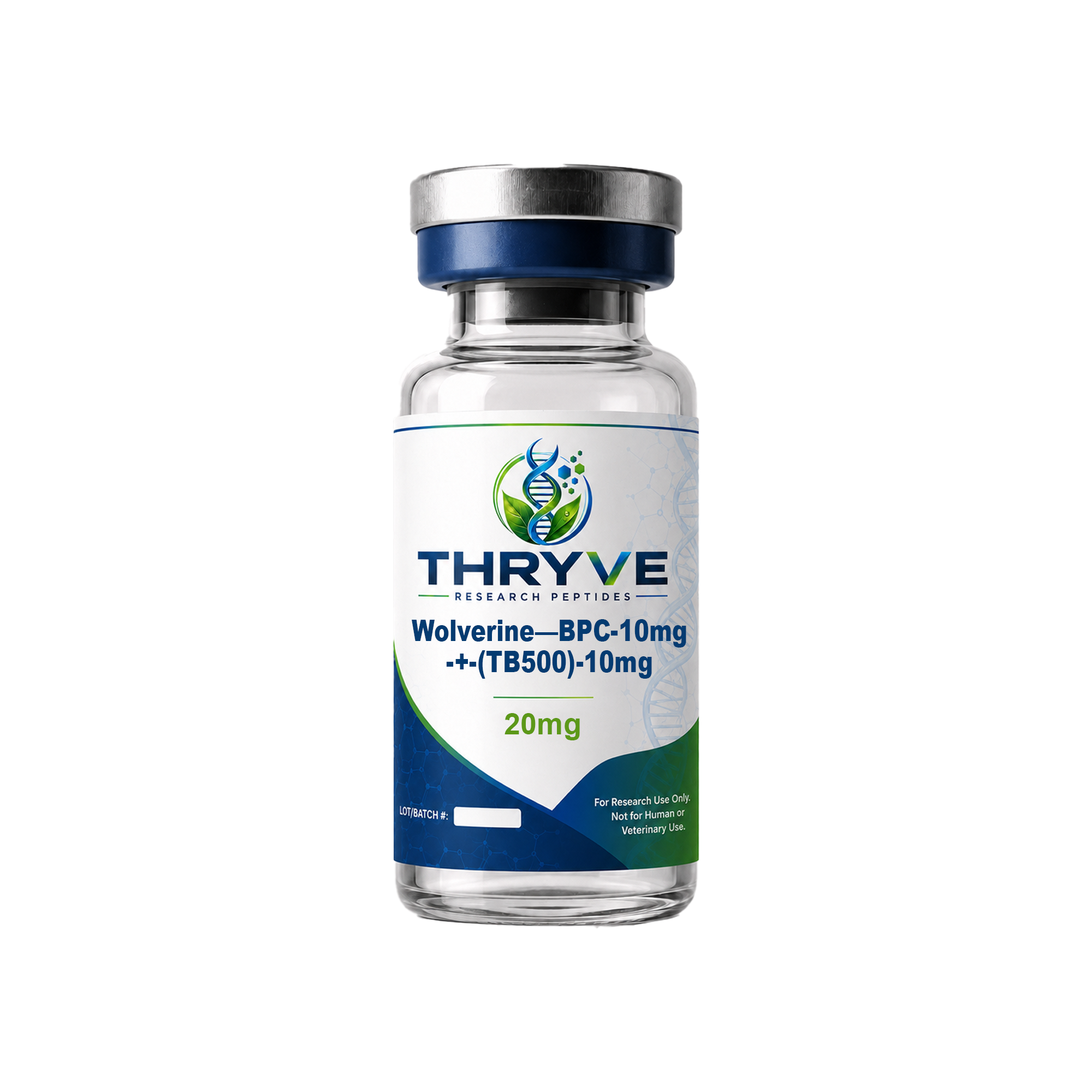
Description
PRODUCT OVERVIEW
The Wolverine blend contains two separately identifiable peptide components:
· BPC-157: A synthetic pentadecapeptide consisting of 15 amino acids, studied in laboratory research involving peptide characterization and biological signaling.
· TB-500: A name used commercially for materials associated with thymosin beta-4. Depending on the supplier, it may refer to a shorter peptide fragment or the full-length thymosin beta-4 peptide.
Because the name TB-500 is not used consistently across all commercial listings, the precise identity of the second component should be confirmed against the supplied product label and batch documentation. The combined formulation does not constitute a single new peptide molecule. <Cite refs={[“turn517796search0″,”turn517796search2”]} />
PRODUCT SPECIFICATIONS
| Specification | Details |
| Product Name | Wolverine BPC-157 + TB-500 |
| Listed Strength | 10mg + 10mg / 20mg total |
| Price | $99.00 |
| Component One | BPC-157 |
| Component Two | TB-500 — exact form requires confirmation |
| Product Category | Combined peptide research material |
| Molecular Formula | Separate formula for each confirmed component |
| Laboratory Documentation | Applicable lot-specific records, where available |
| Intended Context | Laboratory and analytical research |
Composition note: The product title indicates a 10mg + 10mg presentation, totaling 20mg. Confirm the actual component quantities and whether TB-500 refers to the short peptide fragment or full-length thymosin beta-4 before publishing definitive molecular specifications.
SCIENTIFIC BACKGROUND
BPC-157
BPC-157 is a synthetic 15-amino-acid peptide with the reference sequence:
GEPPPGKPADDAGLV
Its molecular formula is C₆₂H₉₈N₁₆O₂₂, with a molecular weight of approximately 1,419.5 g/mol. These identifiers provide reference points for laboratory characterization and identity assessment.
TB-500
TB-500 is used commercially to describe peptide material associated with thymosin beta-4. One commonly referenced short form is the N-acetylated seven-amino-acid sequence Ac-LKKTETQ, while some products use the name for full-length thymosin beta-4, a 43-amino-acid peptide.
These forms differ substantially in sequence and molecular weight and should not be treated as interchangeable. The correct reference information depends on the actual material supplied.
RESEARCH APPLICATIONS
Potential laboratory-focused areas of investigation include:
· Component Identification: Evaluating the identity of each peptide against appropriate reference data.
· Molecular Characterization: Examining the individual components’ chemical and structural properties.
· Blend Composition Analysis: Comparing reported component quantities with available analytical results.
· Analytical Method Development: Assessing suitable methods for characterizing multi-component peptide materials.
· Batch Consistency Review: Comparing labeling, batch identifiers, and documented analytical findings.
· Documentation Assessment: Reviewing whether records distinguish the two components clearly.
These are laboratory research contexts only. They do not establish clinical efficacy, safety, or suitability for human or veterinary use.
QUALITY & LABORATORY DOCUMENTATION
Products are supported by applicable third-party laboratory testing documentation. Independent verification and additional testing may be conducted where appropriate.
Where available, researchers should review lot-specific documentation for:
· Identity of both peptide components
· Stated quantity of each component
· Analytical methods and reported results
· Batch or lot identification
· Testing date and laboratory information
· Any stated limitations or qualifications
For a blended product, documentation should identify the individual components rather than relying solely on a combined total or a single undifferentiated purity figure. Documentation availability and scope may vary by product and lot.
LOT & BATCH REFERENCE
The product label and corresponding batch documentation should be used to confirm the total listed strength, individual component quantities, and exact TB-500 form. Researchers should ensure that all analytical records correspond to the specific lot being evaluated.
STORAGE & HANDLING
Follow the storage and handling requirements stated in the product-specific documentation. Maintain appropriate laboratory labeling, secure storage, and handling procedures in accordance with applicable institutional requirements.
RESEARCH USE STATEMENT
This material is intended strictly for lawful laboratory and analytical research. It is not intended for human or veterinary use, consumption, self-administration, diagnosis, treatment, cure, or prevention of any disease.
Reviews
There are no reviews yet.