Description
PRODUCT OVERVIEW
Cellular Energy & Biochemical Research
NAD+ functions as a coenzyme in a wide range of enzymatic reactions. It participates in metabolic pathways that transfer electrons and is involved in biochemical processes associated with cellular energy conversion.
Researchers also investigate its role as a substrate for enzymes involved in cellular signaling and metabolic regulation. NAD+ is distinct from NADH, its reduced counterpart, and from NADP+, a related coenzyme with a different phosphate composition.
The product’s labeled quantity, chemical form, and analytical characteristics should be confirmed against the applicable supplier specifications and batch documentation.
PRODUCT SPECIFICATIONS
| Specification | Details |
| Product Name | NAD+ |
| Price Range | $89.00 – $110.00 |
| Full Chemical Name | Nicotinamide Adenine Dinucleotide |
| Compound Classification | Dinucleotide coenzyme |
| Oxidation State | Oxidized form |
| Molecular Formula | C₂₁H₂₇N₇O₁₄P₂ |
| Molecular Weight | Approximately 663.4 g/mol |
| CAS Number | 53-84-9 |
| Related Reduced Form | NADH |
| Physical Form | Confirm against supplier specifications |
| Available Quantity Options | Confirm selections on the product listing |
Reference chemical properties describe NAD+ in its free-acid form. Salt forms and hydrates may have different molecular weights and should be identified using the relevant product documentation.
SCIENTIFIC BACKGROUND
NAD+ serves as an electron carrier in cellular redox reactions. During these reactions, it can accept electrons and become NADH; NADH can subsequently transfer electrons in other biochemical processes.
Beyond its role in redox chemistry, NAD+ is also consumed by certain enzyme families involved in cellular signaling and the regulation of proteins and other biomolecules.
Scientific research examines several aspects of NAD+ biology:
· Redox Chemistry: Investigation of electron-transfer reactions and coenzyme cycling.
· Cellular Bioenergetics: Study of metabolic pathways involving NAD+-dependent enzymes.
· Mitochondrial Biology: Examination of biochemical reactions associated with cellular energy conversion.
· Enzyme Activity: Analysis of NAD+-dependent enzymatic processes under controlled conditions.
· Cellular Signaling: Investigation of pathways involving enzymes that use NAD+ as a substrate.
· Analytical Chemistry: Characterization of compound identity, concentration, and stability.
These established biochemical functions provide context for laboratory research but do not independently establish clinical outcomes or the efficacy of a specific commercial product.
RESEARCH APPLICATIONS
NAD+ may be relevant to laboratory investigations involving:
· Metabolic Pathway Analysis: Studying reactions that depend on NAD+ as a coenzyme.
· Redox System Research: Examining the relationship between oxidized NAD+ and reduced NADH.
· Mitochondrial Research: Investigating coenzyme-associated biochemical processes.
· Enzyme Kinetics: Evaluating NAD+-dependent reactions in defined experimental systems.
· Cellular Biochemistry: Characterizing enzyme-mediated processes involving NAD+.
· Molecular Characterization: Confirming chemical identity and evaluating analytical properties.
· Stability Studies: Assessing compound stability under specified laboratory conditions.
These applications describe scientific research areas rather than therapeutic uses or guaranteed experimental outcomes.
QUALITY & LABORATORY DOCUMENTATION
Products are supported by applicable third-party laboratory testing documentation. Independent verification and additional testing may be conducted where appropriate.
Researchers should review available documentation for chemical identity, reported purity, analytical methods, concentration, and batch-specific information. Where relevant, the documentation should distinguish NAD+ from NADH, NADP+, and any salt or hydrate form.
LOT & BATCH REFERENCE
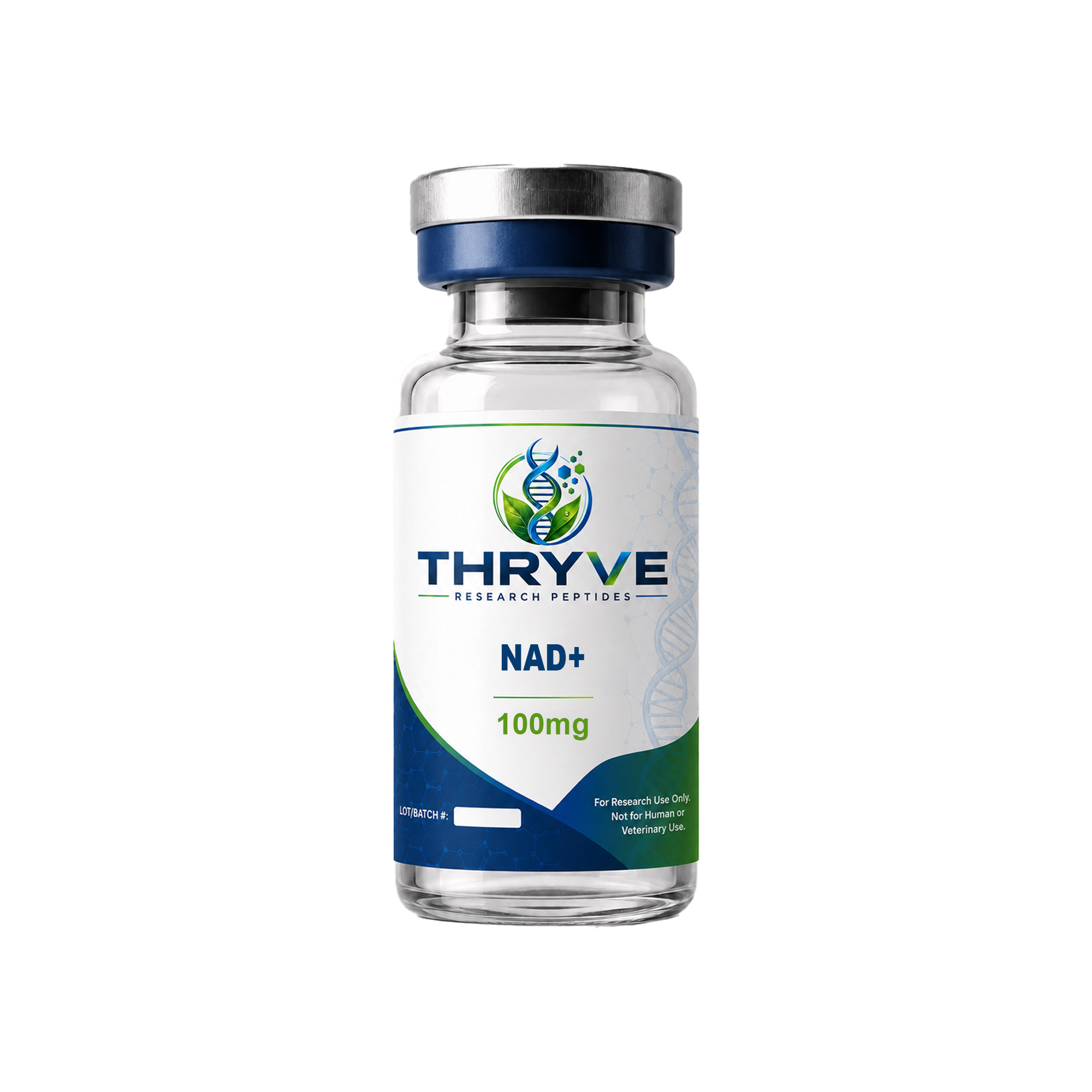
Where available, retain the lot number and corresponding Certificate of Analysis (COA) with laboratory records. Verify that the documentation matches the product name, labeled quantity, and chemical form supplied.
Batch-specific documentation supports traceability and helps distinguish general reference information from the measured characteristics of an individual lot.
STORAGE & HANDLING
Follow the supplier’s documented storage and handling requirements for the exact material supplied. NAD+ stability may depend on factors such as temperature, moisture, light exposure, pH, and formulation.
Consult the applicable technical documentation and safety information for material-specific storage conditions and laboratory handling precautions.
RESEARCH USE STATEMENT
NAD+ is offered strictly for laboratory research and analytical purposes. It is not intended for human or veterinary use, consumption, injection, diagnosis, treatment, or prevention of any disease.
IMPORTANT NOTICE
NAD+ is a biochemical coenzyme, not a peptide. Published information about its cellular functions does not establish the identity, purity, or suitability of a specific commercial batch. Verify the supplied material against its applicable product specifications and lot-specific analytical documentation before conducting research.
Reviews
There are no reviews yet.