
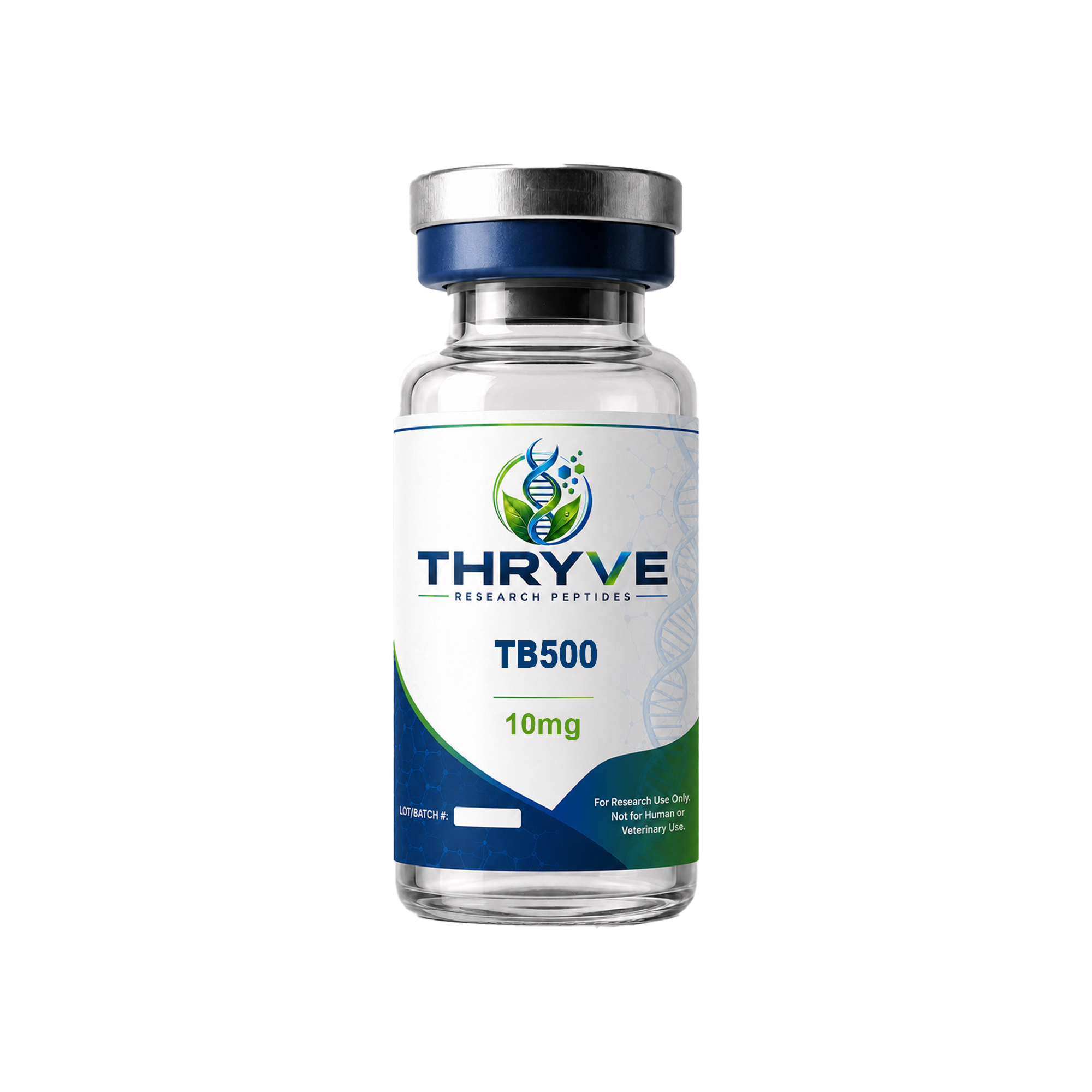
Description
PRODUCT OVERVIEW
Peptide Identity & Analytical Research
TB-500 is commonly associated with the N-acetylated heptapeptide Ac-LKKTETQ, corresponding to residues 17–23 of thymosin beta-4. The fragment is distinct from the full-length, 43-amino-acid thymosin beta-4 protein.
The distinction matters because research findings concerning the parent protein cannot automatically be attributed to the shorter fragment. The precise identity of this product should be established using the supplier’s official specifications and lot-specific analytical documentation.
The listed product quantity is 10mg, with a price of $99.00.
PRODUCT SPECIFICATIONS
| Specification | Details |
| Product Name | TB-500 |
| Labeled Quantity | 10mg |
| Compound Classification | Thymosin beta-4-associated research peptide |
| Common Fragment Sequence | Ac-LKKTETQ |
| Fragment Length | 7 amino-acid residues |
| Fragment Molecular Formula | C₃₈H₆₈N₁₀O₁₄ |
| Fragment Molecular Weight | Approximately 889.0 g/mol |
| Fragment CAS Number | 885340-08-9 |
| Full-Length Thymosin Beta-4 | Distinct 43-amino-acid protein |
| Physical Form | Confirm against supplier specifications |
| Price | $99.00 |
| Batch Identification | Refer to applicable documentation |
The molecular specifications above describe the commonly referenced acetylated TB-500 fragment, not full-length thymosin beta-4. Confirm which molecular form is supplied before publishing these specifications as definitive product attributes.
SCIENTIFIC BACKGROUND
Thymosin beta-4 is a peptide associated with actin-binding and cellular structural processes. The sequence LKKTETQ is a region within the larger protein and has been studied in the context of peptide structure and molecular interactions.
Scientific investigation involving this family of compounds includes:
· Peptide Characterization: Examination of amino-acid sequence, molecular mass, and chemical identity.
· Actin-Related Research: Study of the relationship between thymosin beta-4 and actin-associated cellular processes.
· Molecular Structure: Comparison of a short peptide fragment with its full-length parent protein.
· Analytical Chemistry: Evaluation of peptide identity and chromatographic characteristics.
· Comparative Biochemistry: Examination of structurally distinct peptides in controlled experimental systems.
Research findings must be attributed to the exact molecule studied. Evidence involving full-length thymosin beta-4 does not establish the same properties for the TB-500 fragment.
RESEARCH APPLICATIONS
Subject to confirmation of the supplied molecular identity, TB-500 may be relevant to laboratory investigations involving:
· Peptide Identity Testing: Distinguishing the short fragment from full-length thymosin beta-4.
· Sequence Analysis: Confirming the relevant amino-acid sequence and terminal modifications.
· Molecular Characterization: Evaluating molecular mass and chemical composition.
· Actin-Related Biochemistry: Investigating the scientific context of the corresponding region in thymosin beta-4.
· Analytical Method Development: Comparing suitable methods for peptide identification and purity assessment.
· Batch Comparison: Evaluating documented differences between research-material lots.
These categories describe potential laboratory research areas and do not imply clinical efficacy or a specific biological outcome.
QUALITY & LABORATORY DOCUMENTATION
Products are supported by applicable third-party laboratory testing documentation. Independent verification and additional testing may be conducted where appropriate.
Researchers should review the documentation for the exact supplied lot, including:
· Confirmed molecular identity and sequence
· Reported purity and analytical method
· Molecular mass or other identity-testing results
· Chemical form, including any stated salt
· Lot number and applicable batch information
A purity result alone does not establish that the correct molecule has been supplied.
LOT & BATCH REFERENCE
Where available, retain the lot number and corresponding Certificate of Analysis (COA) with laboratory records. Confirm that the documentation matches the product name, labeled quantity, and molecular form supplied.
Do not use documentation for full-length thymosin beta-4 to verify a seven-amino-acid TB-500 fragment, or vice versa.
STORAGE & HANDLING
Follow the supplier’s documented storage and handling requirements for the exact material supplied. Conditions may depend on molecular form, packaging, and stability characteristics. Consult the applicable technical and safety documentation before laboratory handling.
RESEARCH USE STATEMENT
TB-500 10mg is listed strictly for laboratory research and analytical purposes. It is not intended for human or veterinary use, consumption, injection, diagnosis, treatment, or prevention of any disease.
IMPORTANT NOTICE
TB-500 is not a sufficiently precise molecular identifier on its own because commercial usage can refer to distinct peptide forms. Confirm the exact sequence, molecular mass, chemical form, and lot-specific analytical documentation before conducting research. This listing does not establish clinical efficacy or approval for medical use.
Reviews
There are no reviews yet.