Description
PRODUCT OVERVIEW
A Copper-Binding Tripeptide for Laboratory Research
GHK-Cu combines the tripeptide GHK with a copper(II) ion. Researchers have examined its coordination chemistry and its association with biological processes involving extracellular matrix components and cellular responses.
Preclinical investigations have explored areas such as collagen-related pathways, matrix remodeling, and cellular signaling. However, findings from laboratory or topical cosmetic research do not establish the safety or effectiveness of a specific research material for other applications.
PRODUCT SPECIFICATIONS
| Specification | Details |
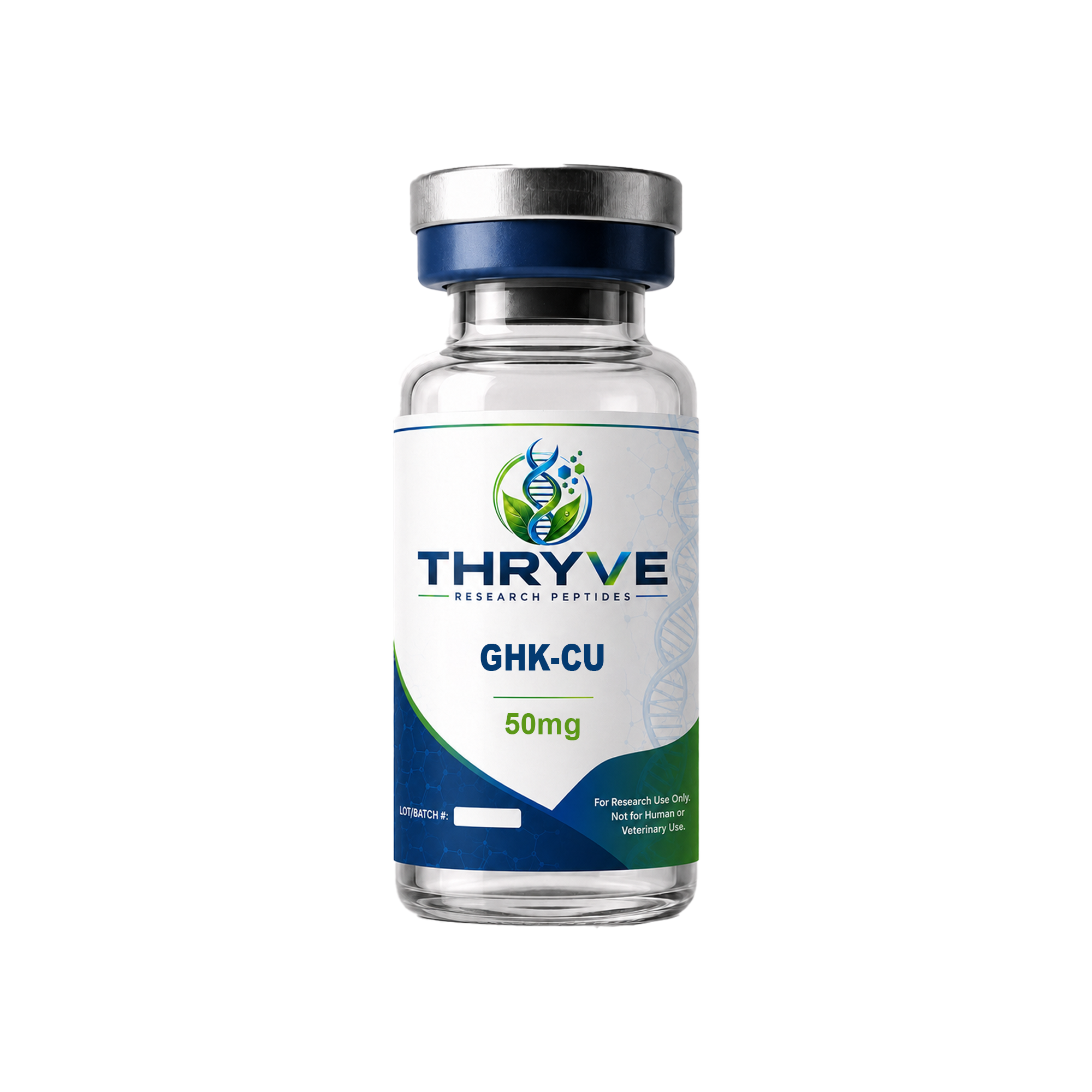
| Product Name | GHK-Cu |
| Alternative Name | Copper Tripeptide-1 |
| Scientific Name | Glycyl-L-Histidyl-L-Lysine Copper Complex |
| Compound Classification | Copper-binding tripeptide |
| Peptide Sequence | Gly-His-Lys (GHK) |
| Metal Component | Copper (II) |
| Price | $89.00–$99.00 |
| Purity | Refer to applicable product and lot documentation |
| Batch Identification | Where provided |
| Supporting Documentation | Applicable product or lot documentation |
SCIENTIFIC BACKGROUND
GHK was identified in human plasma and subsequently studied for its ability to bind copper. The resulting GHK-Cu complex has been examined using biochemical and analytical methods to characterize its molecular structure and copper-coordination properties.
Scientific literature has explored its relationship with extracellular matrix remodeling, cellular responses, and oxidative processes. Much of the evidence for biological effects comes from preclinical studies, while human clinical evidence remains limited and varies by application and formulation.
The chemical state and composition of a GHK-Cu preparation are important research considerations because copper coordination, purity, and formulation can influence its properties.
RESEARCH APPLICATIONS
GHK-Cu may be examined in controlled laboratory settings for:
· Peptide-Metal Coordination: Investigation of copper binding and the chemical characteristics of the GHK-Cu complex.
· Extracellular Matrix Research: Study of molecular pathways associated with matrix components and remodeling.
· Cellular Signaling: Examination of cellular responses observed in defined experimental models.
· Oxidative Process Research: Investigation of copper-related interactions and redox-associated mechanisms.
· Analytical Characterization: Evaluation of compound identity, composition, and relevant analytical properties.
· Stability Studies: Examination of material stability under defined laboratory conditions.
These applications describe scientific research areas and do not establish clinical benefits or product-specific biological activity.
QUALITY & LABORATORY DOCUMENTATION
Products are supported by applicable third-party laboratory testing documentation. Independent verification and additional testing may be conducted where appropriate.
Researchers should review the applicable documentation for reported identity, purity, analytical methods, testing dates, laboratory information, and batch identification, where available. For copper-containing materials, the reported composition and relevant product specifications should also be considered.
LOT & BATCH REFERENCE
Where a lot number or batch identifier is provided, retain it with the corresponding laboratory documentation. This supports traceability and helps researchers associate analytical findings with the relevant product material.
STORAGE & HANDLING
Store and handle GHK-Cu according to the supplier-provided specifications and applicable laboratory procedures. Consult the product documentation for storage conditions, packaging requirements, and handling precautions.
RESEARCH USE STATEMENT
GHK-Cu is offered strictly for laboratory and scientific research purposes. It is not intended for human or veterinary use, consumption, diagnosis, treatment, or prevention of any disease.
IMPORTANT NOTICE
Research findings involving GHK-Cu depend on the specific material, formulation, and experimental context. Review the applicable product specifications and supporting laboratory documentation before research use. No claim is made that this product is approved for human use or has established clinical benefits.
Reviews
There are no reviews yet.